Context
Shopify stores lose the overwhelming majority of their visitors without a sale, and most of that loss happens before anyone reaches the checkout. The tools built for this are popup tools: they were designed to capture email addresses, so they show the same offer to everyone and have no way to connect what they showed to an order that actually happened.
The problem
Every merchant who discounts has the same suspicion: that they are paying people who would have bought anyway. Nothing on the market could answer it, because "revenue recovered" is a number a dashboard can report regardless of what actually happened.
The solution
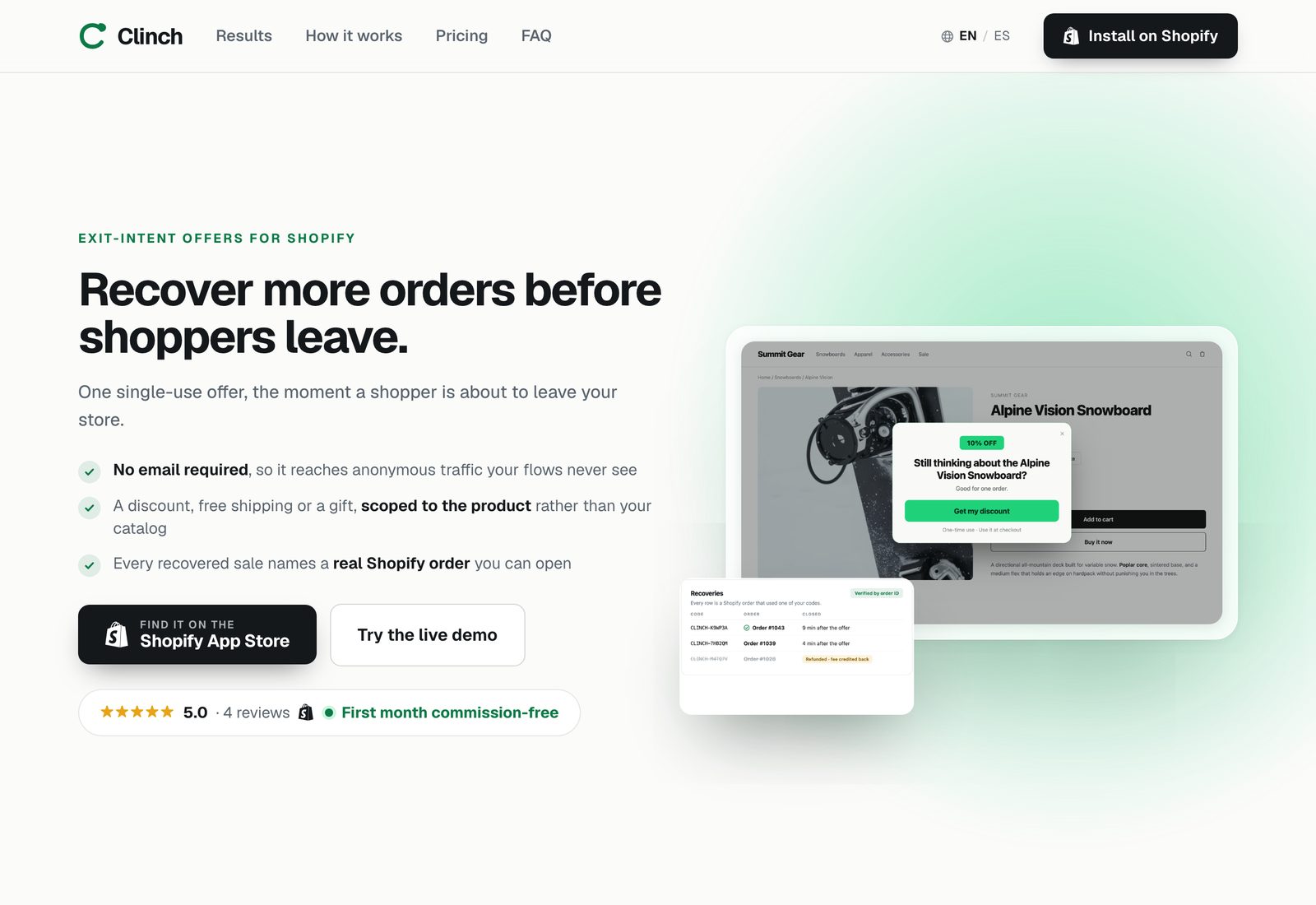
Clinch does two things. It catches a shopper showing an exit signal and offers a single-use, expiring discount scoped to the product they were actually looking at — reaching anonymous visitors that email flows never see. And it holds back a share of eligible shoppers as a control group, compares conversion between the two, and reports the lift with a confidence interval. When there is not enough data it says so instead of guessing, and it reports its own misfires. The measurement is the product as much as the popup is.
What it does
- Reaches anonymous shoppers before they leave, with no email required
- Single-use codes scoped to the product or collection being viewed
- Codes that cannot be farmed or shared, and that follow the shopper
- Skips items already on sale, with a margin floor it will not cross
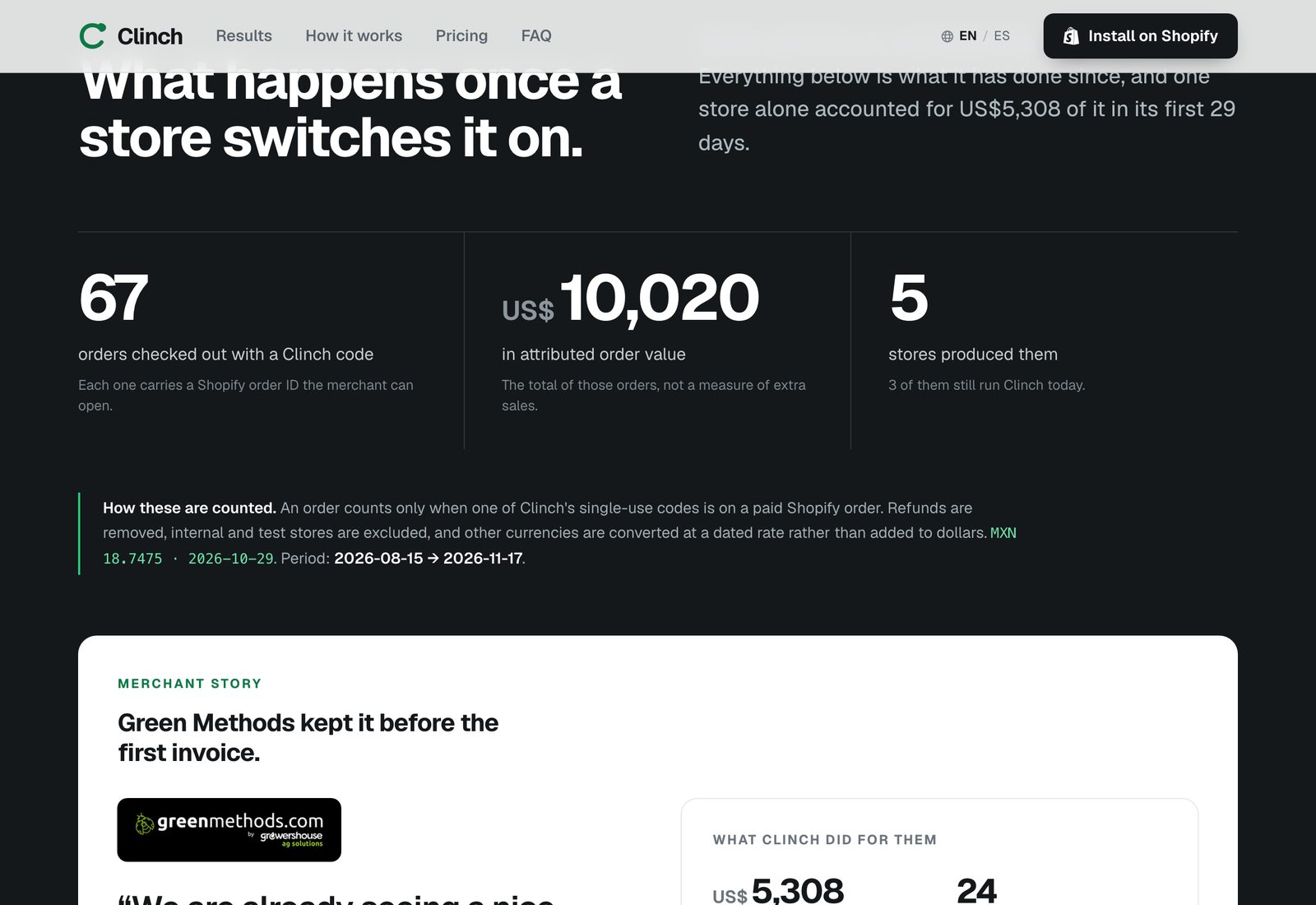
- Every recovery tied to a real Shopify order ID the merchant can open
- Holdout testing that reports lift with a confidence interval
Architecture
A Shopify app with a storefront script that reads page context, cart value and behaviour locally, an eligibility layer that decides whether to intervene at all, single-use code generation against the Shopify Admin API, and an attribution job that reconciles interventions against real orders. The holdout assignment is deterministic per shopper, so the control group stays a control group across sessions.
My role
Founder and sole engineer. Product, Shopify app architecture, billing, the attribution model and the holdout experiment design.
Built with