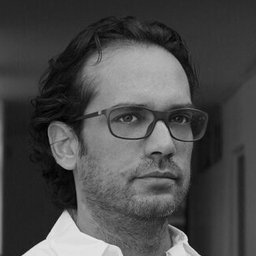
Software, AI and technology leadership for your business.
From building a specific piece of software to becoming the person your company calls about technology, I help businesses solve real problems with software.
You do not need a defined project, a specification or a budget to get in touch. A problem is enough.
PhD in Computer Science · 10+ years · Working with companies worldwide
Most companies start with one of these and move between them over time. We work out which one fits in the first conversation.
Project-Based Development
A defined piece of work, scoped before it starts.
For companies that need a specific thing built: a platform, a system, a digitised process, an integration.
How it works and what it includes
We agree the deliverables, the timeline and what "done" means before any code is written. You get weekly progress and something working to look at at each milestone, not a status report. At the end, the code, the infrastructure and the documentation are handed over and they are yours.
What it includes
Scoping and a written proposal before the work begins
Architecture and technical decisions documented
Weekly progress and a working version at each milestone
Deployment to production
Handover documentation and knowledge transfer
Right for you if
You know roughly what needs to exist, and you need it built properly and on a date.
Technology capability every month, without hiring a team.
For companies that need technical work continuously: maintenance, improvements, integrations and automation, but not a full in-house development team.
How it works and what it includes
A fixed monthly arrangement: your systems are maintained and monitored, and an agreed amount of development time goes to whatever matters most that month. Over time this becomes the most useful version of working together, because I know your systems well enough to be useful the same day you ask.
What it includes
Maintenance, updates and monitoring of your systems
An agreed amount of development time each month, spent as you choose
Integrations and automation as the need appears
Someone accountable when something stops working
A standing technical contact for your team
Right for you if
Technology is part of how you operate, the needs keep coming, and right now there is nobody to call.
For companies that need strategy, architecture and someone accountable for technology decisions, before a full-time CTO is justified.
How it works and what it includes
I take on the technology direction on a defined commitment: the strategy, the architecture, the provider decisions and the hard calls. I am hands-on enough to still write code when that is the fastest way to settle something, and I am the person your team and your board can ask.
What it includes
Technology strategy tied to where the business is going
Architecture and the decisions that are expensive to reverse
Oversight of internal developers and external providers
Evaluation of proposals and quotes before you commit
Infrastructure, security and continuity planning
A defined number of days a month, agreed up front
Right for you if
Technology decisions are being made without anyone genuinely accountable for them.
One-off projects and long-term relationships. Hotel Santa Fe, Cresenda, SOA, Proyecto Arte 7 and Casona Roma, among others, have worked with me on an ongoing basis or with me as their fractional CTO.
We turned to Héctor to bring our online education project to life, and the result was exceptional. Beyond his technical expertise, he has become a strategic partner, and we continue to work with him to manage and evolve our platform.
Héctor combines technical judgment with a real eye for design. We've collaborated on several projects, and he has always known how to translate our creative vision into digital solutions.
The collaboration between SOA, leading design and marketing, and Héctor, overseeing development and web technology, has been exceptional. Their combined efforts have helped us increase hotel bookings, achieving one of the primary objectives of our new website.
Five steps, and the first one costs you nothing but a conversation.
01
Initial conversation
We talk about the company, what is not working and what you want to be different. You do not need a defined project, a specification or a budget for this.
02
Discovery
When the case calls for it, I look in depth at the systems and processes involved to find where the opportunity actually is; sometimes it is not where it first appeared. This diagnosis is quoted separately, and you know its cost before it starts.
03
Proposal
Scope, the right working model, deliverables and timeline, in writing. If I am not the right person for it, this is where I say so.
04
Execution
I build and deploy it, with weekly progress and something working to look at rather than a status report.
05
Ongoing support
Where it makes sense, the relationship continues: maintenance, improvements and whatever comes next. Where it does not, you have everything you need to carry on without me.
I do not have a defined project yet. Should I still write?
Yes, and that is most of the conversations I have. A problem, a process that is costing too much, or a decision you are unsure about is enough to start from. Working out what should actually be built is part of the job, not a prerequisite for it.
How does a project get scoped?
We talk about the situation and, when it is needed, I look in depth at the systems and processes involved. I turn that into a written proposal with deliverables, a timeline and what "done" means, all before any code is written. If I think the right answer is to buy something rather than build it, I will say so there.
What does it cost?
It depends on how we work together, and you always know before you commit. A project starts with a written proposal covering scope, timeline and cost. Ongoing support is a fixed monthly agreement, and fractional CTO work is a set number of days a month, agreed up front. The first conversation is free. When an in-depth diagnosis of your systems is needed, it is quoted separately and you know its cost before it starts.
Can we start with something small?
Yes, and it is often the sensible way in: one process, one integration or one concrete improvement. You see how I work before committing to anything larger.
Can you work with our existing systems, or with our current team or provider?
Yes, and that is the usual case. I work on what you already have, whether that is an ERP, an online store, a spreadsheet the operation depends on or a custom system, and I coordinate with your team or your current provider. Nothing has to be replaced to get started.
Do you work with non-technical companies?
That is most of my client work. I handle the technical decisions and explain the ones that affect your business in terms you can act on. You should never have to take a technical claim on faith.
Who actually does the work?
I do. There is no agency layer and no account manager. The person who scopes your project is the person who writes the code and the person who answers when something breaks.
Do you work remotely, and in which countries?
Remotely, from Mexico, with companies anywhere. Most of my clients are in Mexico, the United States and Canada. I work in Spanish and English, and for local clients, meeting in person is not a problem.
Do you issue invoices in Mexico?
Yes, I issue Mexican electronic invoices (CFDI). For companies outside Mexico, invoicing is agreed as part of the proposal.
Who owns the code?
You do, from day one: code, infrastructure and accounts, documented well enough that another developer could take it over. Nothing is locked to me. And yes, I sign NDAs as a matter of course.
Get in touch
Tell me what's going on.
Tell me what you want to improve, build or automate in your business. A few lines are enough.
I reply within 24 hours.
Got it.
Your message is in my inbox and a confirmation is on its way to you. I reply within 24 hours.
That did not go through. Try again, or email me directly at me@hectorguedea.com